
Festival
Vat Savitri Vrat
वट सावित्री व्रत
Krishna paksha Amavasya of Vaishakha (Jyeshtha in the North Indian, purnimanta calendar).
Vat Savitri Vrat dates
- 2026
- Saturday, 16 May 2026
- 2027
- Friday, 4 June 2027
Dates for Delhi. A tithi can begin and end at different times in different places, so a festival can fall a day apart; the panchang for your city shows the tithi day by day.
About Vat Savitri Vrat
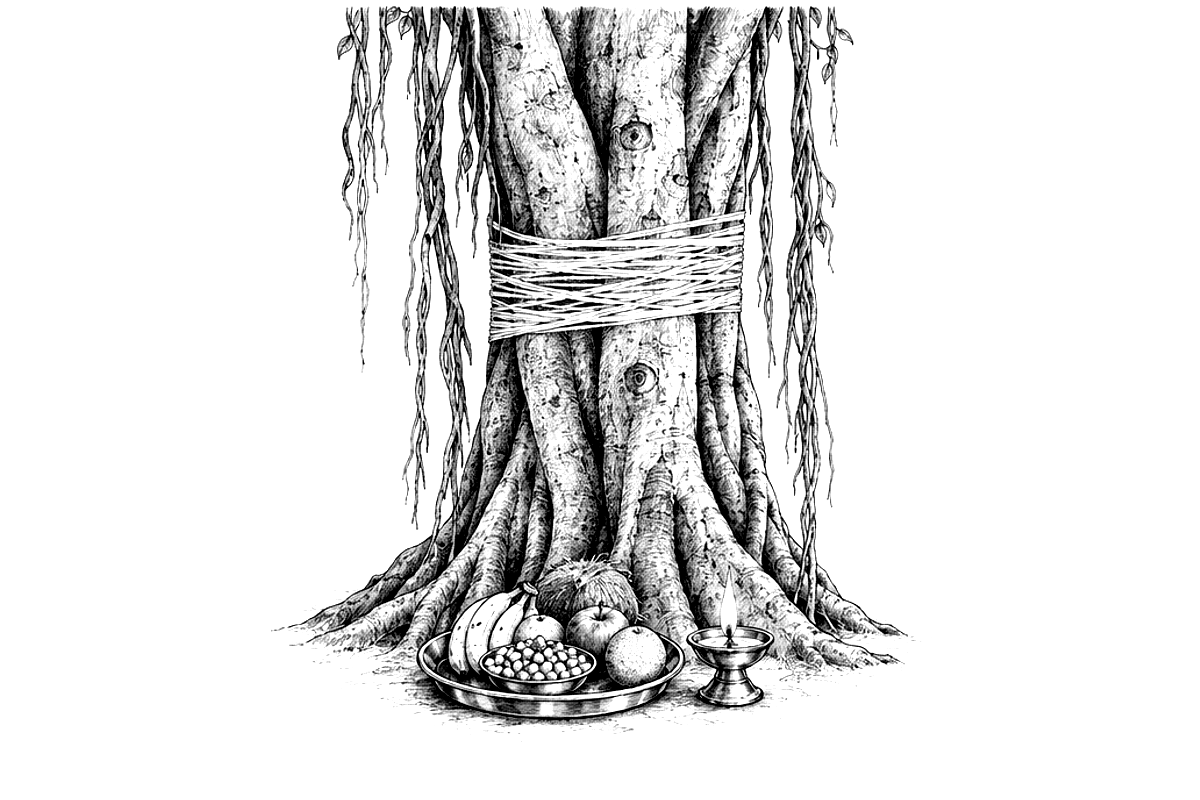
Vat Savitri Vrat is kept by married women on Jyeshtha Amavasya, the new moon of Jyeshtha in the purnimanta calendar (Vaishakha in the amanta calendar), across North India. Maharashtra, Gujarat and the South keep it instead as Vat Purnima on Jyeshtha Purnima, fifteen days later. Women fast, worship the banyan (vat) tree, wind raw cotton thread around its trunk and listen to the story of Savitri and Satyavan.
Significance
The vrat honours Savitri, who through devotion, wisdom and resolve won back her husband Satyavan's life from Yama, as the Mahabharata tells. The long-lived, ever-spreading banyan is revered as the dwelling of Brahma, Vishnu and Shiva, and women pray beneath it for the long life of their husbands and the well-being of their families.
Puja vidhi
Vat Savitri Puja
The worship of the banyan tree, Savitri and Satyavan by married women on Vat Savitri Amavasya (or Vat Purnima), usually done in the morning or before midday, at a banyan tree or with a banyan branch at home.
Vat Savitri Vrat, Jyeshtha Amavasya (or Jyeshtha Purnima as Vat Purnima), morning to midday · About 60 minutes
- 1Wake before sunrise, bathe and wear clean festive clothes; many women wear a red or bridal sari with full shringar. Take the sankalpa for the vrat, stating your name and your prayer for your husband's long life.
- 2Keep the fast as your family's custom directs. Many women fast without food until the puja is done, and some until the next morning. By custom, the elderly, pregnant women and those with health conditions often keep a lighter fast with fruit, milk and water.
- 3The evening before, soak black gram (chana) in water; it is offered in the puja and used to break the fast.
- 4Prepare the puja thali with roli, haldi, akshat, flowers, soaked gram, fruits, a ghee lamp, incense, raw cotton thread and a lota of water.
- 5Go to a banyan tree with the other women of the family, or set a banyan branch in a pot of earth at home. Clean the ground around its roots and draw a small rangoli.
- 6Place images of Savitri and Satyavan beneath the tree; some families shape them from clay or draw them on paper.
- 7Pour water at the roots of the tree, then offer roli, haldi, akshat, flowers and soaked gram to the tree and to Savitri and Satyavan.
- 8Offer shringar items to Savitri: bangles, sindoor, bindi, mehendi and a red chunri, and wave a bamboo hand fan towards the tree as a gesture of service.
- 9Light the ghee lamp and incense.
- 10Walk around the tree 7, 21 or 108 times, winding raw cotton thread around the trunk as you go and praying for your husband's long life.
- 11Sit beneath the tree and read or listen to the Vat Savitri katha.
- 12Offer naivedya of seasonal fruits such as mango, puris, gulgule or other sweets, and soaked gram. Perform the aarti of Savitri with the lamp.
- 13Touch the feet of your mother-in-law and the elder women, and give your mother-in-law a bayana: a basket of fruit, soaked gram, sweets, clothes or shringar items with dakshina.
- 14Break the fast as your family's custom directs; many women swallow a few grains of soaked gram with water from the puja, then eat a sattvik meal.
Satyavan's life returned to him beneath a banyan tree, so the tree stands for long life and steadfast devotion. Winding thread around it binds the prayer for a long and faithful marriage, and Savitri is remembered as a model of courage, wisdom and love.
Puja samagri
- Raw cotton thread (kachcha soot)
- Roli or kumkum, haldi and akshat (unbroken rice)
- Black gram (chana), soaked overnight
- Mauli (sacred red thread)
- Flowers and a garland
- Bamboo hand fan
- Ghee lamp, cotton wicks and incense sticks
- Lota of water
- Images of Savitri and Satyavan, or clay to shape them
- Seasonal fruits such as mango
- Puris, gulgule or other sweets
- Shringar items: bangles, sindoor, bindi, mehendi and a red chunri
- Betel leaves and supari
- Bayana basket and dakshina for the mother-in-law