
Festival
Pitru Paksha
पितृ पक्ष
Shukla paksha Purnima of Bhadrapada.
Pitru Paksha dates
- 2026
- 26 September to Saturday, 10 October 2026
- 2027
- 15 September to Thursday, 30 September 2027
Dates for Delhi. A tithi can begin and end at different times in different places, so a festival can fall a day apart; the panchang for your city shows the tithi day by day.
About Pitru Paksha
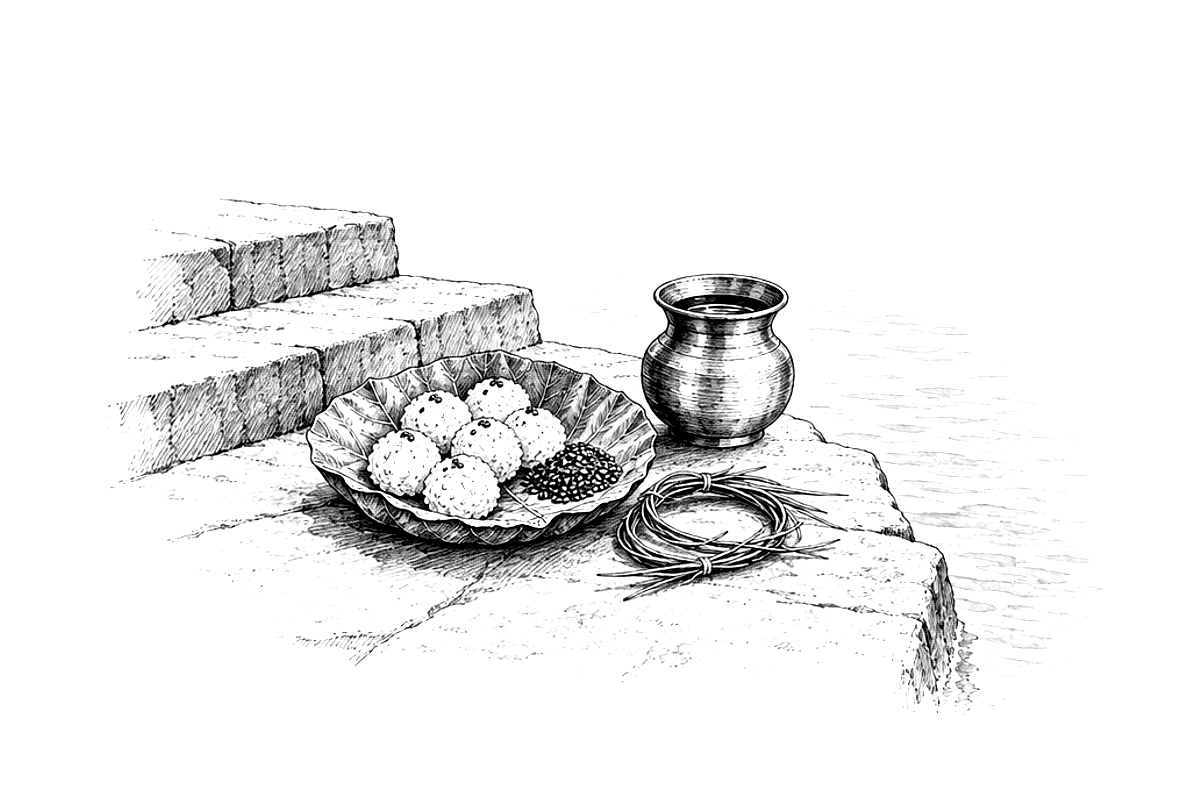
Pitru Paksha is the fortnight of the ancestors, running from Bhadrapada Purnima through the dark fortnight of Ashvina (which amanta calendars call the dark fortnight of Bhadrapada) to Sarva Pitru Amavasya, usually in September or October. On the tithi on which a parent or ancestor died, the family performs shraddha and tarpan, offering water with black sesame, pinda and food in their name, and feeds Brahmins, the needy, cows and crows.
Significance
Tradition holds that during this fortnight the ancestors draw close to their descendants, and that offerings made with faith (shraddha) bring them peace and draw their blessings on the family. Sarva Pitru Amavasya, also called Mahalaya Amavasya, is for ancestors whose tithi is unknown or was missed; the season is kept as a time of remembrance, simplicity and charity, and new purchases and celebrations are usually postponed.
Puja vidhi
Pitru Paksha Shraddha and Tarpan
A general household guide to the shraddha and tarpan performed on an ancestor's tithi during Pitru Paksha, usually in the kutapa or aparahna (late morning to afternoon) period. The rite varies by family, community and Veda shakha; follow your family priest's guidance, and where a full shraddha is not possible, a simple tarpan and feeding of the needy offered with sincerity is accepted.
Pitru Paksha, on the ancestor's death tithi (or Sarva Pitru Amavasya), in the late morning or early afternoon · About 90 minutes
- 1Find the tithi on which the ancestor died and the corresponding day in Pitru Paksha; if it is not known, use Sarva Pitru Amavasya. Consult your family priest about the form of shraddha your family follows and who in the family performs it.
- 2Keep the day simple: the performer bathes, wears clean (traditionally white) clothes, avoids eating until the rite is done, and the household cooks sattvic food without onion and garlic.
- 3Prepare the food the ancestor liked, along with kheer, puri or rice, and seasonal vegetables, setting aside portions for the cow, the crow, the dog and the ants before anyone eats.
- 4Sit facing south on a clean seat in a quiet, clean place, ideally in the late morning (kutapa kaal). Keep kusha grass, black sesame, water, flowers and a copper or brass vessel ready.
- 5Wear a ring of kusha (pavitri) on the ring finger of the right hand. Those who wear the sacred thread shift it to the right shoulder (apasavya), as is customary for rites for the ancestors.
- 6Take the sankalpa, naming yourself, your gotra, and the ancestor or ancestors for whom the shraddha is offered, and the date and place.
- 7Perform tarpan: hold kusha, black sesame and water in cupped hands and let the water flow over the base of the thumb (pitru tirtha) onto kusha laid in a plate, three times for each ancestor, saying their name and gotra and "tasmai svadha namah" (or "tasyai svadha namah" for a woman).
- 8Make pindas, small balls of cooked rice (or barley flour) mixed with black sesame, ghee and honey, and offer them on kusha grass with water and flowers, as your priest directs.
- 9Offer the set-aside portions (panchabali): place one for the cow, one for the crow on a rooftop or wall, one for a dog and one for the ants. A crow eating the food is traditionally taken as a sign the offering was received.
- 10Feed one or more Brahmins, or a needy person or family, with respect, offering them the meal first, followed by dakshina, clothes or grain as you are able.
- 11With folded hands, pray for the peace of the ancestors, ask forgiveness for any shortcomings in the rite, and remember them with gratitude. Many read the Bhagavad Gita or the Garuda Purana during this fortnight.
- 12Return the sacred thread to the left shoulder, immerse the pindas in flowing water or give them to a cow, and only then let the family eat the prasad together.
Shraddha repays the debt to the ancestors (pitru rina): by offering water, food and charity in their name, the family expresses gratitude for the life and values it has received and prays for their peace. The rite also keeps the family's memory and lineage alive across generations.
Puja samagri
- Kusha (darbha) grass, and a kusha ring (pavitri)
- Black sesame seeds (til)
- Copper or brass vessel and a plate for tarpan
- Clean water, with Ganga jal if available
- Cooked rice or barley flour, ghee and honey for the pindas
- White flowers
- Sandalwood paste
- Ghee lamp and incense sticks
- Sattvic food the ancestor liked, kheer and puri
- Leaf plates or bowls for the cow, crow, dog and ants (panchabali)
- Photograph of the ancestor (optional)
- Dakshina, clothes or grain to give in charity
Aartis and kathas
All festivalsPanchang for September 2027Every aarti and katha