
Festival
Maha Shivaratri
महाशिवरात्रि
Krishna paksha Chaturdashi of Magha (Phalguna in the North Indian, purnimanta calendar).
Maha Shivaratri dates
- 2026
- Sunday, 15 February 2026
- 2027
- Saturday, 6 March 2027
Dates for Delhi. A tithi can begin and end at different times in different places, so a festival can fall a day apart; the panchang for your city shows the tithi day by day.
About Maha Shivaratri
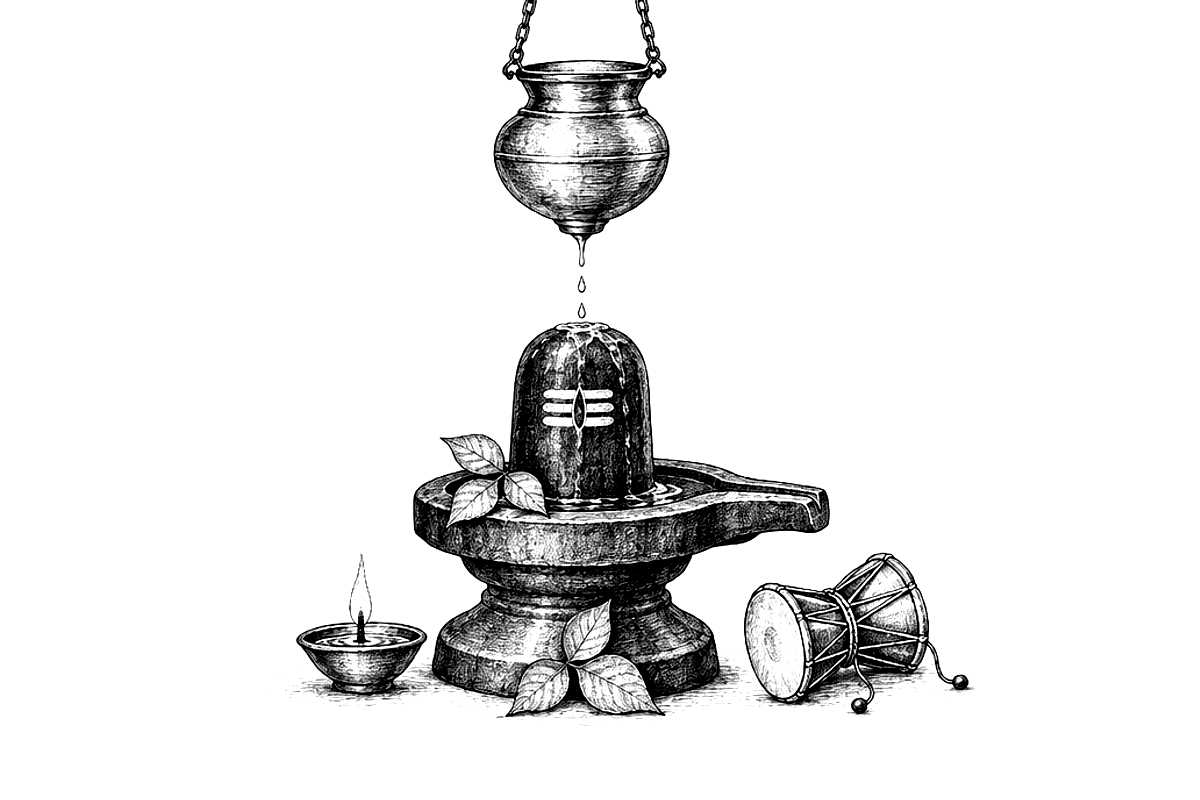
Maha Shivaratri falls on the Chaturdashi (fourteenth day) of the dark fortnight of Phalguna in the purnimanta calendar, the month called Magha in the amanta calendar, in February or March. Devotees fast through the day, bathe the Shivalinga with water, milk and panchamrit, offer bilva leaves, and keep vigil through the night, with the most important worship at nishita kaal, around midnight.
Significance
It is the great night of Shiva. Tradition remembers it as the night Shiva appeared as an endless pillar of fire, the first linga, and as the night of his marriage to Parvati. The Shiva Purana teaches through the story of the hunter that fasting, vigil and the offering of water and bilva leaves on this night bring Shiva's grace even to one who worships unknowingly.
Puja vidhi
Maha Shivaratri Puja
The household fast, abhishek and night vigil of Maha Shivaratri. The night is divided into four prahars, and many worship in each; if you can worship only once, do it at nishita kaal as shown in your local panchang.
Maha Shivaratri, Phalguna Krishna Chaturdashi (Magha in the amanta calendar), through the night · About 90 minutes
- 1In the morning, bathe, worship briefly and take the sankalpa for the fast. Families fast in different ways: without water, with fruit and milk, or with one meal of fasting food. Choose what your health allows.
- 2In the evening bathe again and put on clean clothes. Set a Shivalinga (stone, metal or one shaped from clay) on a plate or stand that lets water drain away, or go to a temple for the abhishek.
- 3Sip water three times (achamana) and worship Ganesha first with roli, akshat, a flower and durva grass.
- 4Begin the abhishek. Pour water mixed with Ganga jal over the linga in a thin, steady stream while chanting "Om Namah Shivaya".
- 5Bathe the linga in turn with milk, curd, ghee, honey and sugar (or with panchamrit mixed together), and then again with clean water.
- 6Apply sandalwood paste, and vibhuti (sacred ash) if that is your family's custom. Offer akshat, white flowers, aak and dhatura flowers and fruit. Tradition avoids offering kumkum, turmeric and the ketaki flower on the linga.
- 7Offer bilva leaves, ideally with three leaflets and unbroken, with the smooth side touching the linga, one at a time while chanting "Om Namah Shivaya".
- 8Offer incense and a ghee lamp, then naivedya: fruits, ber, and sweets or kheer made for the fast.
- 9Chant "Om Namah Shivaya" 108 times on a rudraksha mala, or the Mahamrityunjaya mantra, and recite the Shiv Chalisa.
- 10Read or listen to the Maha Shivaratri katha of the hunter and the bilva tree.
- 11Perform the aarti with a ghee lamp, "Om Jai Shiv Omkara", while the family rings the bell and sings along.
- 12Go around the linga only halfway (ardha parikrama), turning back at the channel where the abhishek water flows out rather than stepping over it, and ask forgiveness for any mistakes in the worship.
- 13Stay awake through the night (jagaran) with bhajans, japa and reading, repeating the abhishek in each prahar if you are following the four-prahar worship.
- 14Break the fast (parana) the next morning after sunrise, within the parana time given in your panchang, after offering food to someone in need.
Fasting quiets the body, vigil keeps the mind awake, and the abhishek with water and bilva is the simplest and dearest offering to Shiva. The night is held to wash away the sins of many lives and to turn the mind toward Shiva, the auspicious one.
Puja samagri
- Shivalinga on a plate or stand that drains, or access to a temple
- Ganga jal and a copper lota
- Milk, curd, ghee, honey and sugar for panchamrit
- Bilva leaves (with three leaflets)
- Dhatura and aak flowers, and white flowers
- Sandalwood paste, and vibhuti if customary
- Akshat (unbroken rice)
- Durva grass and roli for Ganesha
- Ghee lamp, cotton wicks, incense and camphor
- Fruits, ber and fasting sweets or kheer
- Rudraksha mala for japa
- Bell, and a plate (thali) for the aarti