
Festival
Hanuman Jayanti
हनुमान जयंती
Shukla paksha Purnima of Chaitra.
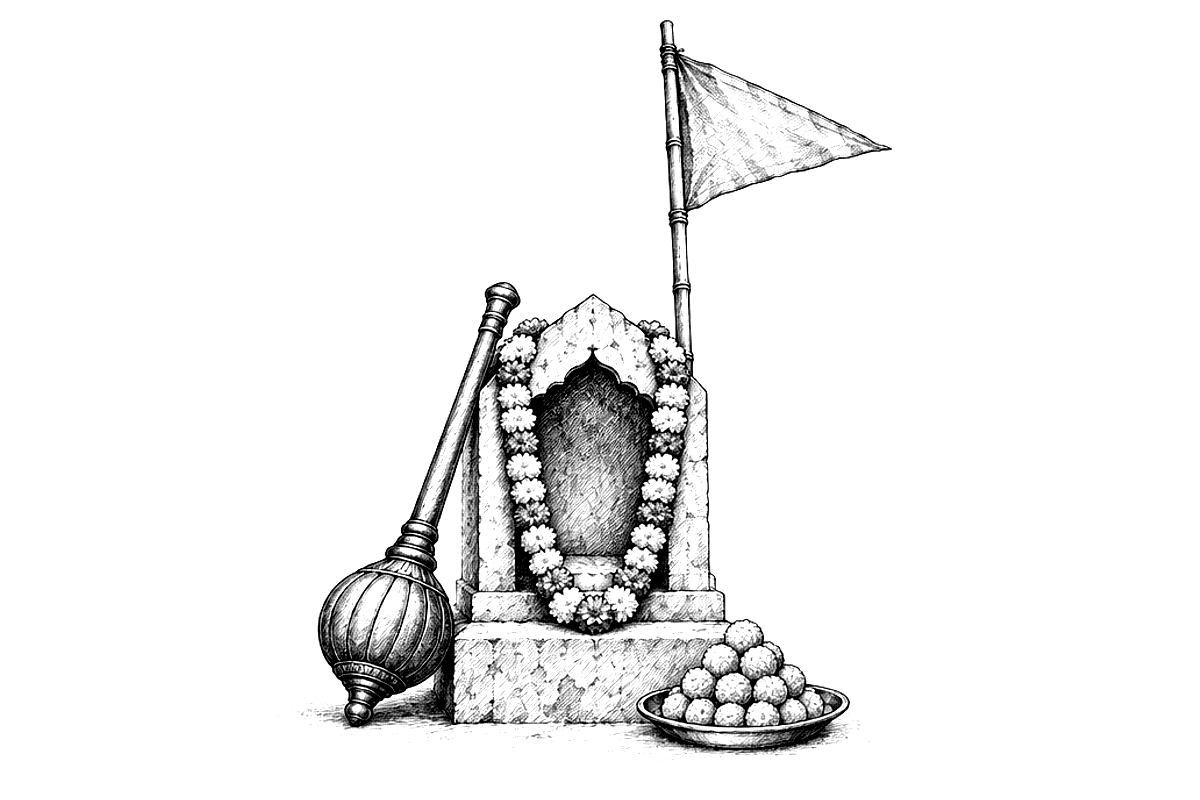
Hanuman Jayanti dates
- 2026
- Thursday, 2 April 2026
- 2027
- Tuesday, 20 April 2027
Dates for Delhi. A tithi can begin and end at different times in different places, so a festival can fall a day apart; the panchang for your city shows the tithi day by day.
About Hanuman Jayanti
Hanuman Jayanti, also called Hanuman Janmotsav, is kept across most of North India on Chaitra Purnima, the full moon of Chaitra, with worship at sunrise, the hour of his birth. Devotees fast, offer sindoor and jasmine oil, and recite the Hanuman Chalisa and the Sundara Kanda. Dates differ by region: Tamil Nadu keeps it on the new moon of Margazhi, Andhra Pradesh and Telangana on Vaishakha Krishna Dashami, at the end of a forty-one-day observance, Karnataka on Margashirsha Shukla Trayodashi as Hanuman Vratam, and Odisha on Pana Sankranti.
Significance
Hanuman, son of Anjana and Kesari and blessed by Vayu, is the ideal devotee and servant of Rama, joining immense strength with humility, wisdom and self-control. Worshipping him on his birthday is believed to bring courage, protection from fear and harm, and steadfast devotion.
Puja vidhi
Hanuman Jayanti Puja
The household worship of Hanuman on Hanuman Jayanti morning, ideally begun around sunrise, with the recitation of the Hanuman Chalisa.
Hanuman Jayanti, Chaitra Purnima, at sunrise (regional dates vary) · About 60 minutes
- 1Rise before dawn, bathe and wear clean clothes, red or saffron if you have them. Keep a fast or eat simple satvik food, and keep the day free of anger and harsh speech.
- 2Set up a chowki with a red cloth and place an image of Hanuman on it, with a picture of Rama and Sita beside or above him.
- 3Sit facing east, sip water three times (achamana) and take the sankalpa, stating your name, the date and place, and your prayer.
- 4Worship Ganesha briefly with a flower and akshat, then offer a flower and a tulsi leaf to Rama and Sita, for Hanuman is pleased first by worship of Rama.
- 5Offer water to Hanuman. For a stone or metal murti, apply sindoor mixed with jasmine oil (chola); for a picture, place a pinch of sindoor at his feet.
- 6Offer red flowers, a marigold garland, a sacred thread (janeu), roli and akshat.
- 7Light a lamp of ghee or jasmine oil and incense sticks.
- 8Offer naivedya: boondi or besan laddoos, jaggery with roasted chana, and bananas, with a betel leaf.
- 9Recite the Hanuman Chalisa, once or seven, eleven or a hundred and eight times as you are able. Many also read the Sundara Kanda.
- 10Chant "Om Shri Hanumate Namah" 108 times on a rudraksha or tulsi mala.
- 11Perform the aarti with the lamp while singing "Aarti Kije Hanuman Lala Ki".
- 12Offer flowers with folded hands, walk around the shrine or turn in place, and ask forgiveness for any mistakes.
- 13Listen to the katha, then share the prasad with family and neighbours, and give food or help to someone in need.
Sindoor recalls the story, told in folk tradition, that Hanuman covered himself in it after Sita told him it was for Rama's long life. Reciting the Chalisa on his birthday asks for his strength, courage and protection, and for the single-minded devotion to Rama that he embodies.
Puja samagri
- Chowki with a red cloth
- Image of Hanuman, and of Rama and Sita
- Sindoor and jasmine oil (chameli tel)
- Red flowers and a marigold garland
- Sacred thread (janeu)
- Roli and akshat
- Tulsi leaves
- Ghee or jasmine oil lamp, cotton wicks
- Incense sticks and camphor
- Boondi or besan laddoos
- Jaggery and roasted chana
- Bananas and betel leaves
- Hanuman Chalisa book and a mala