
Festival
Diwali (Lakshmi Puja)
दीपावली (लक्ष्मी पूजन)
Krishna paksha Amavasya of Ashvina (Kartika in the North Indian, purnimanta calendar).
Diwali (Lakshmi Puja) dates
- 2026
- Sunday, 8 November 2026
- 2027
- Friday, 29 October 2027
Dates for Delhi. A tithi can begin and end at different times in different places, so a festival can fall a day apart; the panchang for your city shows the tithi day by day.
About Diwali (Lakshmi Puja)
Diwali, the festival of lights, falls on the Amavasya (new moon) of Kartika, the month called Ashvina in the amanta calendar. On the main evening families light their homes with rows of diyas and worship Lakshmi, the goddess of prosperity, together with Ganesha, the remover of obstacles, during pradosh kaal just after sunset.
Significance
Diwali celebrates the victory of light over darkness. The Ramayana recalls the lamps lit to welcome Rama home to Ayodhya, and the Puranas tell of Lakshmi rising from the churning of the ocean. Worshipping Lakshmi on this night invites prosperity into the home; traders worship their account books and begin the new financial year.
Puja vidhi
Diwali Lakshmi Puja
The household worship of Ganesha and Lakshmi on Diwali evening, done during pradosh kaal (roughly the first two and a half hours after sunset), ideally within the sthir lagna shown in your local panchang.
Diwali, Kartika Amavasya, during pradosh kaal · About 60 minutes
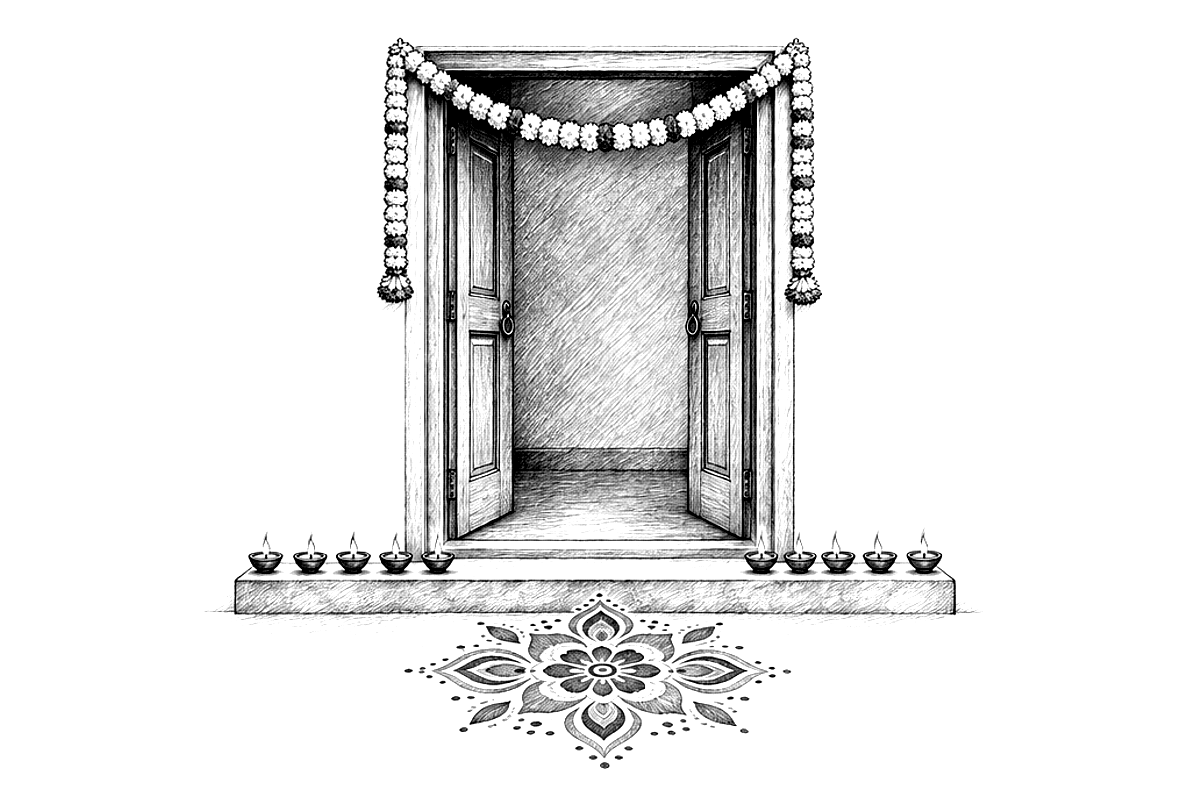
- 1During the day, clean the whole home and the place of worship. Draw a rangoli at the entrance and place diyas at the threshold.
- 2Bathe and wear clean clothes before the muhurat. Set up a low platform (chowki) facing east or north and cover it with a red or yellow cloth.
- 3Spread a handful of rice on the cloth and place a kalash of water on it, with a coin and a betel nut inside, mango leaves around the mouth and a coconut on top.
- 4Place the images of Ganesha and Lakshmi on the platform. Keep coins, jewellery or new account books in front of Lakshmi.
- 5Sit facing the platform, sip water three times (achamana) and take the sankalpa: state your name, the date and place, and your intention for the puja.
- 6Worship Ganesha first. Offer water, roli, akshat (unbroken rice), flowers, durva grass and a sweet, chanting "Om Gam Ganapataye Namah".
- 7Worship the kalash with roli, akshat and a flower, inviting the sacred rivers and deities into it.
- 8Worship Lakshmi. Invite her, offer a seat, water to wash her feet and to sip, a bath (panchamrit for a metal image, a few drops of water for a picture), a red cloth or mauli, kumkum, haldi, akshat, lotus or red flowers and a garland.
- 9Offer incense and a ghee lamp, then naivedya: kheel, batashe, sweets or kheer, fruits, and a betel leaf with supari, cloves and cardamom. Place dakshina before her.
- 10Chant "Om Shreem Mahalakshmyai Namah" 108 times, or recite the Shri Suktam if you know it.
- 11Those who keep accounts worship their account books, pen and cash box with roli, akshat and flowers, writing "Shubh" and "Labh" with a swastika on the first page.
- 12Perform the aarti with a ghee lamp, first "Jai Ganesh Deva" and then "Om Jai Lakshmi Mata", while the family rings the bell and sings along.
- 13Offer flowers with folded hands (pushpanjali), walk around the platform or turn in place three times, and ask forgiveness for any mistakes in the worship.
- 14Light diyas in every room, on the balcony and at the door. Share the prasad with the family and neighbours. Many homes keep one lamp burning through the night.
Ganesha is worshipped first so that the puja proceeds without obstacles; Lakshmi is then welcomed as an honoured guest into a clean, lit home. The rite asks for prosperity earned honestly and shared generously.
Puja samagri
- Chowki (low platform) with a red or yellow cloth
- Images or idols of Ganesha and Lakshmi
- Kalash, mango leaves, coconut, coin and betel nut
- Rice (akshat), roli or kumkum, haldi, sandalwood paste
- Mauli (sacred red thread)
- Lotus, marigold or other red flowers, and a garland
- Durva grass for Ganesha
- Clay diyas, ghee or sesame oil, cotton wicks
- Incense sticks and camphor
- Panchamrit: milk, curd, ghee, honey and sugar
- Kheel (puffed rice) and batashe
- Sweets or kheer, and fresh fruits
- Betel leaves, supari, cloves and cardamom
- Coins or jewellery, and account books if you keep them
- Bell, and a plate (thali) for the aarti