
Festival
Dhanteras
धनतेरस
Krishna paksha Trayodashi of Ashvina (Kartika in the North Indian, purnimanta calendar).
Dhanteras dates
- 2026
- Friday, 6 November 2026
- 2027
- Wednesday, 27 October 2027
Dates for Delhi. A tithi can begin and end at different times in different places, so a festival can fall a day apart; the panchang for your city shows the tithi day by day.
About Dhanteras
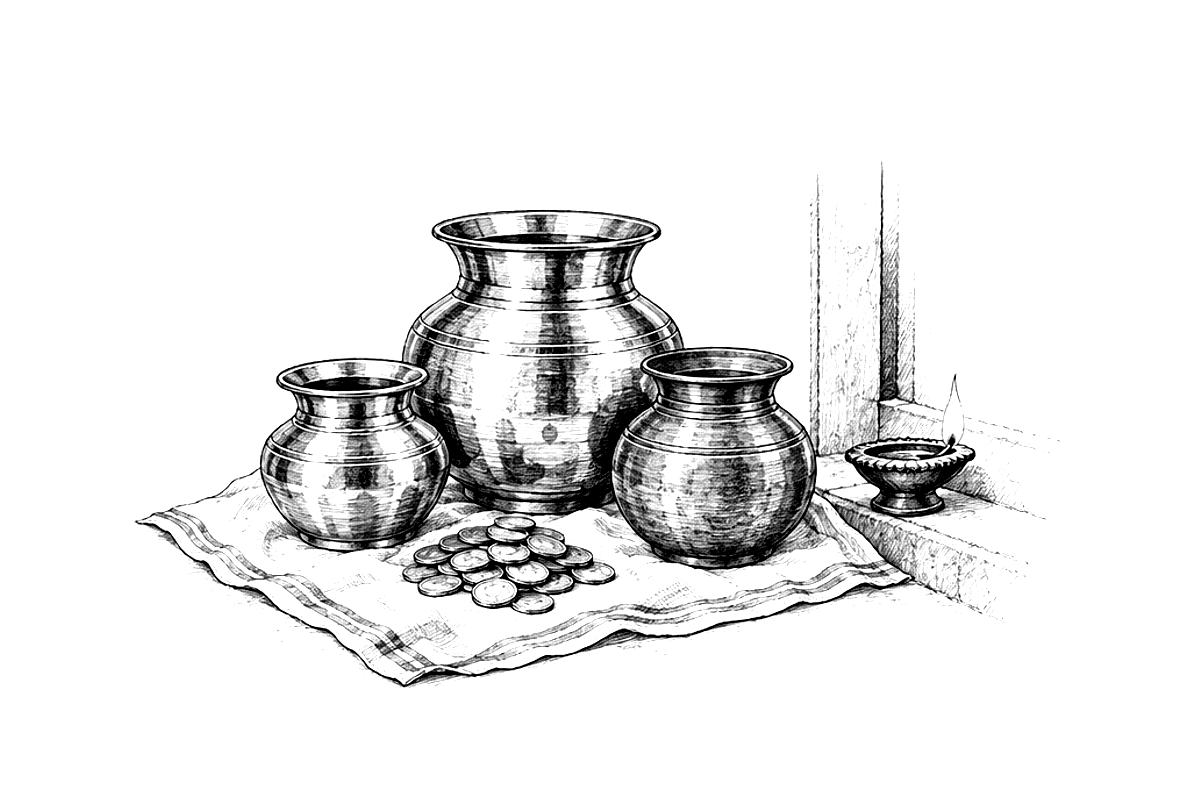
Dhanteras, or Dhanatrayodashi, falls on the Krishna Trayodashi of Kartika (Ashvina in the amanta calendar), two days before Diwali, and opens the five days of the festival. Families buy gold, silver or new metal utensils, worship Dhanvantari, Lakshmi and Kubera in the evening during pradosh kaal, and light a lamp for Yama facing south at the doorway.
Significance
The Puranas tell that Dhanvantari, the physician of the devas, rose from the churning of the ocean on this day holding the pot of amrita, so the day is also kept as Dhanvantari Jayanti and honoured as a day of health and Ayurveda. The story of King Hima's son explains the Yama Deepdaan, a prayer that no one in the family meets an untimely death.
Puja vidhi
Dhanteras Dhanvantari Puja and Yama Deepdaan
The evening worship on Dhanteras of Ganesha, Dhanvantari, Lakshmi and Kubera, followed by the lamp offered to Yama at the doorway. It is done during pradosh kaal, shortly after sunset, as shown in your local panchang.
Dhanteras, Kartika Krishna Trayodashi, during pradosh kaal · About 45 minutes
- 1During the day, clean the home, especially the entrance, and draw a rangoli at the door. If it is your custom, buy a new metal utensil, a coin or jewellery, ideally before the evening puja.
- 2At dusk, bathe or wash and set up a chowki facing north or east with a red or yellow cloth. Place images of Ganesha, Lakshmi and Dhanvantari (and Kubera, if you worship him), with a kalash of water.
- 3Place the new utensil, coins or jewellery before Lakshmi and Kubera; many fill the new vessel with rice, sweets or water.
- 4Sit facing the chowki, sip water three times (achamana) and take the sankalpa, naming yourself, the date and place, and asking for health and prosperity for the family.
- 5Worship Ganesha first with roli, akshat, durva, a flower and a sweet, chanting "Om Gam Ganapataye Namah".
- 6Worship Dhanvantari with sandalwood paste, akshat, yellow flowers, tulsi leaves, incense and a ghee lamp, and recite his dhyana shloka and mantra, or chant "Om Dhanvantaraye Namah" 108 times. Many also place their medicines or a small pot of honey before him.
- 7Worship Lakshmi and Kubera with kumkum, haldi, akshat, red flowers and a garland, chanting "Om Shreem Mahalakshmyai Namah" and "Om Kuberaya Namah". Worship the new utensil and the coins with roli and akshat.
- 8Offer naivedya: sweets, a dish of jaggery with coriander seeds (dhaniya) as is customary in many homes, fruit, and a betel leaf with supari.
- 9Perform the aarti with a ghee lamp, singing "Jai Ganesh Deva" and "Om Jai Lakshmi Mata", and ask forgiveness for any mistakes in the worship.
- 10For Yama Deepdaan, prepare a large clay lamp with four wicks (chaumukha diya) filled with mustard or sesame oil, and worship it with roli, akshat and a flower.
- 11Place the lit lamp outside the main door, on a little heap of grain, with its flames facing south, and pray to Yama for the protection of the family from untimely death. Some recite "mrityuna pashadandabhyam kalena shyamaya saha, trayodashyam deepadanat suryajah priyatam iti".
- 12Light diyas at the entrance, in the courtyard and on the balcony, and leave the Yama lamp to burn out on its own. Share the prasad with the family.
Worship of Dhanvantari asks for health, the first wealth, and worship of Lakshmi and Kubera welcomes prosperity at the start of Diwali. The lamp for Yama, placed facing his direction, is a prayer of the household for long life and protection.
Puja samagri
- Chowki with a red or yellow cloth
- Images of Ganesha, Lakshmi and Dhanvantari (and Kubera, if worshipped)
- Kalash with water
- New metal utensil, coins or jewellery
- Roli or kumkum, haldi, sandalwood paste and akshat
- Durva grass and tulsi leaves
- Red and yellow flowers and a garland
- Ghee lamp, cotton wicks, incense sticks and camphor
- Large four-wick clay lamp (chaumukha diya) with mustard or sesame oil for Yama
- A handful of grain to set the Yama lamp on
- Clay diyas for the entrance and balcony
- Sweets, jaggery with coriander seeds, and fruit
- Betel leaves and supari
- Bell and an aarti thali